Steel scaffolding provides temporary access and support for workers carrying out construction, maintenance, and repair work at height. Its safety depends on more than strong steel tubes. Every component must fit correctly, loads must be distributed safely, and the structure must suit the work being performed.
Understanding the main parts, applicable standards, and assembly process helps contractors make informed decisions. For projects in the UAE, choosing suitable equipment and following approved installation procedures are essential for safe and efficient site operations.
What Is Steel Scaffolding and How Does It Work?
Steel scaffolding uses connected steel tubes and fittings to create temporary working platforms at height. Its design depends on site conditions, access needs, and load requirements.
A typical system includes several essential components:
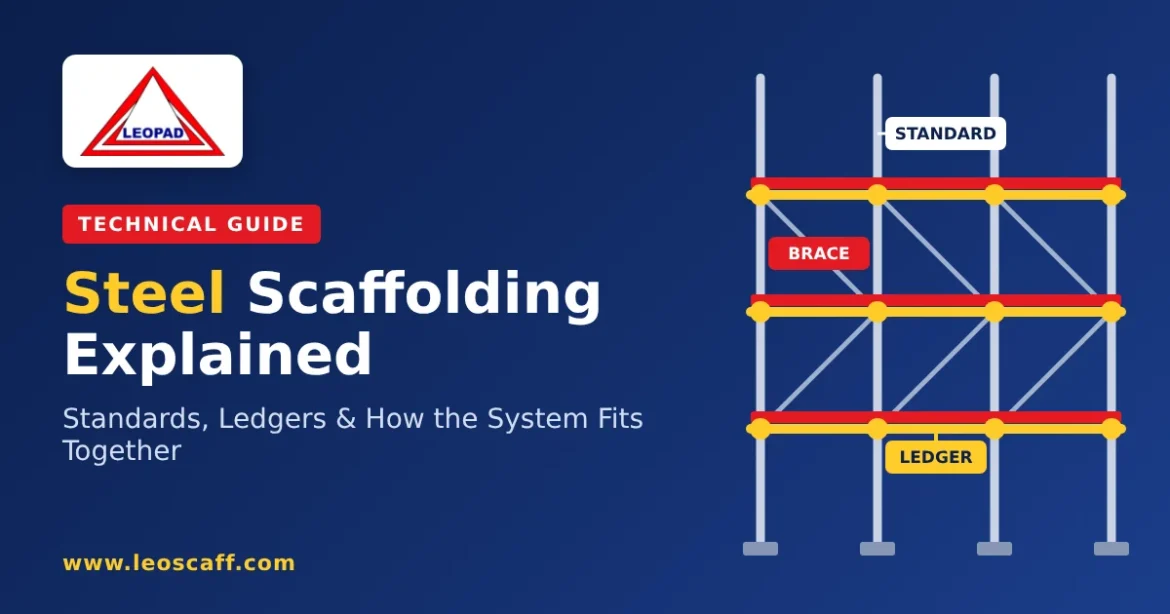
- Standards: Vertical tubes that transfer loads towards the supporting ground or foundation.
- Ledgers: Horizontal tubes running parallel to the building, connecting the standards.
- Transoms: Crosswise members that support scaffold boards and help maintain the required width.
- Braces: Diagonal members that improve stability and resist sideways movement.
- Base plates: Components that distribute loads at the bottom of the standards.
- Platforms and guardrails: Working surfaces and protective barriers that help reduce fall risks.
These components work together to create a usable structure. However, their arrangement must follow the scaffold design and the manufacturer’s instructions.
What Are Standards and Why Do They Matter?
Standards are the vertical members that form the main supporting framework. They carry loads from the working platforms and connected components down to the supporting surface.
In standard scaffolding, these vertical tubes are positioned at planned intervals and connected with ledgers and transoms. Their spacing depends on the scaffold configuration, loading requirements, and design specifications.
Three factors deserve particular attention when positioning standards:
- Load capacity: The arrangement must support workers, materials, tools, and other expected loads.
- Ground conditions: The supporting surface must be capable of carrying the transferred loads without excessive settlement.
- Vertical alignment: Standards must remain properly aligned to avoid uneven loading and instability.
Base plates and sole boards help distribute loads, while adjustable base jacks accommodate minor level differences. Standards must have proper spacing, support, and alignment to maintain scaffold stability.
How Do Ledgers Connect the Scaffold Frame?
Ledgers are horizontal tubes that connect standards along the length of a scaffold. They help maintain the framework’s geometry and transfer loads between connected members.
In ledger scaffolding, the arrangement of horizontal and vertical tubes creates a framework that can be adapted to different building shapes and working requirements. Ledgers also provide connection points for other components, depending on the system design.
Their correct installation is important for several reasons:
- Frame alignment: Ledgers help maintain consistent spacing between standards.
- Structural continuity: Secure connections allow loads to move through the designed framework.
- Platform support: Ledgers work with transoms and other members to establish the required platform arrangement.
- Overall stability: Correctly installed components help the scaffold maintain its intended shape.
Ledgers must be connected using compatible fittings and installed at the specified heights. Missing members, loose connections, or unauthorized changes can weaken the structure.
Workers should also understand that ledgers do not replace diagonal bracing. Each component serves a specific purpose within the scaffold design.
How Do the Different Components Fit Together?
Scaffolding works as a connected system rather than a collection of separate tubes. Every component has a defined role in supporting loads, maintaining alignment, or providing safe access.
The following table explains how the main parts work together.
| Component | Main function | What to check |
|---|---|---|
| Standards | Carry vertical loads | Alignment and base support |
| Ledgers | Connect standards horizontally | Secure fittings and correct level |
| Transoms | Support platform arrangements | Position and connection security |
| Braces | Resist sideways movement | Correct placement and secure fixing |
| Base plates | Transfer loads to the ground | Stable, suitable supporting surface |
| Scaffold boards | Create working platforms | Condition, support, and secure positioning |
| Guardrails and toe boards | Help protect workers and prevent objects from falling | Correct installation and continuity |
Assembly generally begins with preparing the supporting surface and positioning the base plates. Standards are then erected and connected with ledgers and transoms. Bracing, platforms, access arrangements, and edge protection are installed according to the approved design.
The scaffold must be inspected before use by a competent person. Workers should not use it until the required checks are complete and it has been authorized for access.
Which Standards and Safety Requirements Should Contractors Follow?
Scaffolding safety depends on the system, site conditions, and local regulations. Contractors in the UAE should check applicable authority requirements and project specifications before installation.
Key standards include:
- EN 12811-1: Covers performance and design requirements for access and working scaffolds.
- EN 39: Covers steel tubes used in tube-and-coupler scaffolding.
- UAE safety requirements: Include applicable local regulations and project-specific procedures.
The relevant standards depend on the scaffold type and components. Before installation, verify tube specifications, fitting compatibility, load limits, and manufacturer documentation.
Inspect scaffolding after erection and following alterations or adverse weather. Follow applicable regulations and site procedures for inspection frequency.
What Should You Know About Fittings, Clamps, and Connections?
Connections hold scaffold members together and help transfer forces through the structure. Their condition and compatibility directly affect the safety of the assembled framework.
Steel pipe clamps are commonly used in tube-and-coupler systems to connect tubes at specified angles. Depending on their design, they may provide right-angle connections or allow tubes to be joined diagonally.
Before using any fitting, contractors should check the following:
- The fitting is compatible with the tube dimensions and scaffold system.
- Couplers are free from visible damage, excessive corrosion, and deformation.
- Connections are tightened according to the manufacturer’s instructions.
- Components are not mixed without confirming their suitability.
- Damaged or defective fittings are removed from service.
Connections should never be improvised to make incompatible components fit. Nor should workers replace specified fittings with makeshift alternatives.
Proper storage also matters. Keeping tubes and fittings organized in a tube rack or fitting bin, protected from unnecessary damage, and separated by type makes inspection and assembly easier.
How Can Contractors Choose Suitable Scaffolding Materials?
Choosing the right materials starts with understanding the project. Contractors should consider working height, platform size, load requirements, ground conditions, and site access before purchasing or hiring equipment.
Tubes must meet required specifications, and fittings must provide secure connections. Check corrosion protection, component condition, and product documentation.
An experienced steel fabrication company in the UAE can help contractors assess material needs and sourcing options. All supplied components must meet project specifications and include proper documentation. If you are comparing suppliers, see our guide to the top scaffolding companies in UAE.
At Leopad Dubai LLC, choosing suitable materials and compatible components helps support safe and efficient scaffold planning.
What Common Scaffolding Mistakes Should You Avoid?
Small installation errors can affect the safety and performance of an entire scaffold. Contractors should pay close attention to the details that are easy to overlook during busy site operations.
Common mistakes include:
- Using an unsuitable foundation: Soft or uneven ground can cause settlement and instability.
- Leaving out braces: Missing diagonal members can reduce resistance to sideways movement.
- Overloading platforms: Excess materials and equipment can exceed the permitted load.
- Mixing incompatible fittings: Poorly matched connections may not perform as intended.
- Making unauthorized changes: Removing ledgers or braces can compromise the original design.
- Ignoring inspections: Damage, loose connections, or changes in ground conditions may go unnoticed.
Good site practices help prevent these problems. Keep access routes clear, distribute materials as specified, and report any visible defects immediately. Only authorized, competent personnel should modify the scaffold.
Build Safer Projects With the Right Scaffolding Knowledge
Understanding standards, ledgers, fittings, and safety requirements helps contractors make informed decisions. Properly designed steel scaffolding provides reliable access and supports efficient site operations.
Before selecting equipment, assess site conditions, verify component specifications, and follow approved installation and inspection procedures.
With Leopad Dubai LLC, focus on getting the right scaffolding components for your project’s specific needs. Prioritize material quality, compatible fittings, and proper planning to support safe work at height and keep construction activities running smoothly.
Key Takeaways
- Scaffolding safety depends on correct design, component compatibility, and proper assembly.
- Standards carry vertical loads, while ledgers connect the framework horizontally.
- Transoms, braces, platforms, and fittings each serve a specific function.
- Applicable UAE requirements and recognized technical standards should guide selection and installation.
- Competent inspections help identify defects and changes that could affect stability.
- Material quality, suitable ground support, and correct loading are essential throughout the project.
Frequently Asked Questions
What is the main purpose of steel scaffolding?
It provides temporary access and safe working platforms for construction, maintenance, and repair work at height.
What is the difference between standards and ledgers?
Standards are vertical tubes that carry loads, while ledgers are horizontal tubes that connect the standards.
Why is diagonal bracing important?
Diagonal bracing improves scaffold stability and helps prevent sideways movement.
How often should scaffolding be inspected?
Inspect scaffolding after erection and as required by safety regulations. Reinspect it after alterations or events that may affect stability.
What should contractors check before purchasing scaffolding from Leopad Dubai LLC?
Check material quality, component compatibility, load requirements, and technical documentation to ensure the system suits the project.