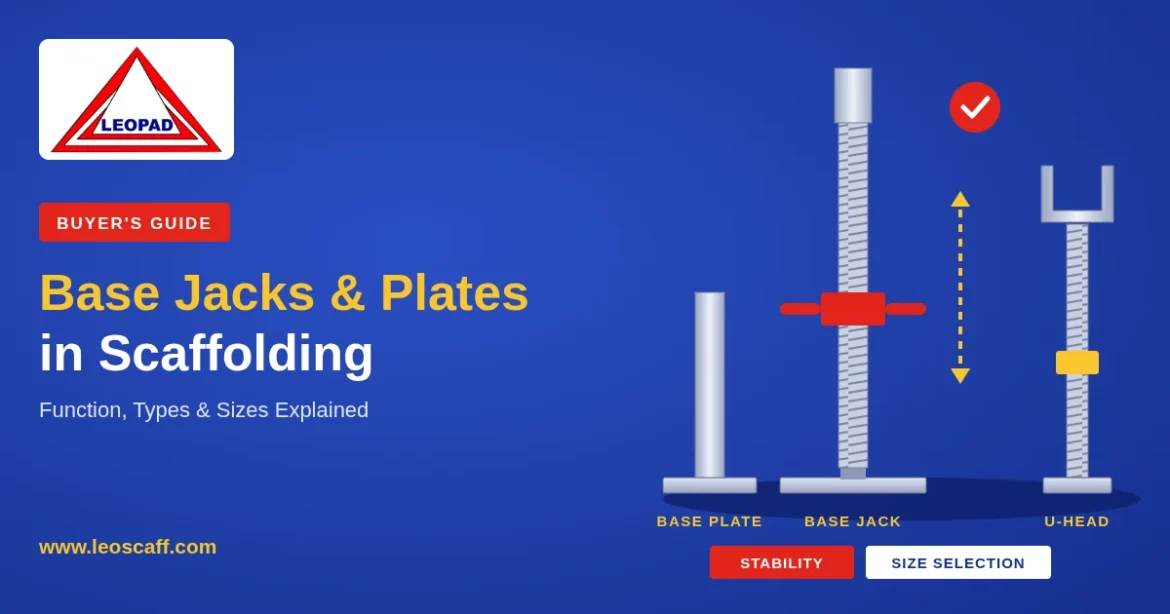
A stable scaffold starts with the right support at ground level. Without proper base support, even a well-built structure can become unstable under the weight of workers, tools, and materials.
Base plates in scaffolding help distribute this weight across the ground, while base jacks allow height adjustments to keep the structure level. Understanding how these components work, their different types, and available sizes helps contractors choose suitable equipment for safer construction work.
Key Takeaways
- Base plates distribute scaffold weight across the supporting ground.
- Base jacks help adjust scaffold height and maintain proper alignment.
- Fixed, adjustable, swivel, and U-head jacks serve different purposes.
- Choose plate sizes according to load requirements, ground conditions, and scaffold design.
- Always inspect components for damage before installation.
- Buy compatible, quality-tested scaffolding components from reliable suppliers.
What Are Base Jacks and Base Plates in Scaffolding?
Base jacks and base plates are fitted at the bottom of scaffolding structures. They provide support between the scaffold standards and the ground, but each component has a different function.
A base plate is a flat metal component placed beneath a scaffold standard. It spreads the load over a wider area and prevents direct contact between the standard and the supporting surface.
A base jack is an adjustable support component with a threaded stem. It allows workers to change the height of individual scaffold supports to achieve the required level.
For construction projects, scaffolding base plates UAE requirements should be considered alongside the scaffold design and site conditions.
| Component | Main function |
| Base plate | Distributes the scaffold load across the supporting surface |
| Adjustable base jack | Helps adjust scaffold height and level |
| Swivel base jack | Provides an adjustable bearing arrangement for suitable applications |
| U-head jack | Supports beams and structural members in formwork and shoring |
Both components must be compatible with the scaffolding system and selected according to the manufacturer’s specifications.
Why Are Base Plates Important for Scaffold Stability?
Base plates may be small compared with the overall scaffold structure, but they perform an important job. They help transfer the weight of the scaffold safely to the supporting ground.
Here is how they contribute to stability:
- Distribute weight: They spread the load from scaffold standards over a larger surface area.
- Reduce ground pressure: They help prevent individual scaffold legs from pressing directly into the ground.
- Support alignment: They provide a proper bearing point for scaffold standards.
- Protect the ground: They reduce the risk of localized damage to suitable supporting surfaces.
- Improve overall support: They work with other foundation components to create a stable scaffold base.
However, a base plate alone cannot correct weak or poorly prepared ground. Soft surfaces may require properly designed sole boards or other suitable support arrangements.
Which Types of Base Jacks and Plates Should You Know About?
Different scaffolding applications require different support components. Knowing their basic features makes it easier to understand where each type is used.
1. Fixed Base Plates
These are flat metal plates fitted beneath scaffold standards. They provide a firm bearing surface and are commonly used on prepared, level ground.
2. Adjustable Base Jacks
These have a threaded stem that allows height adjustment. They help level scaffold structures when the supporting surface has minor variations.
3. Swivel Base Jacks
Swivel base jacks have an adjustable bearing arrangement that can accommodate certain angled surfaces. Their use depends on the scaffold design and approved application.
4. U-Head Jacks
These have a U-shaped top designed to hold beams and other structural members. They are commonly used in formwork and shoring systems, alongside components such as adjustable forkheads.
Each type serves a different purpose, so contractors should avoid using one component as a replacement for another without checking its suitability.
How Do You Select the Correct Base Plate Size?
Choosing the right size is important for proper load distribution. A plate that is too small or unsuitable for the expected load may not provide adequate support.
Before purchasing, consider these five factors:
- Load requirements: Calculate the expected weight of workers, equipment, materials, and the scaffold itself.
- Ground conditions: Check whether the supporting surface is concrete, compacted soil, or another material.
- Plate dimensions: Select a size suitable for the scaffold design and required bearing conditions.
- Material thickness: Confirm that the plate has sufficient strength for its intended use.
- Equipment compatibility: Make sure the plate fits the scaffold standard and follows the manufacturer’s specifications.
There is no universal size for every scaffolding project. Dimensions and thickness can vary between products and applications. Always follow the manufacturer’s recommendations and applicable safety requirements instead of choosing a plate based only on appearance.
What Should You Check Before Installing These Components?
Proper installation starts with checking the equipment and preparing the supporting surface. A few simple steps can help prevent common setup problems.
Before installation:
- Inspect plates for bending, cracks, corrosion, and other visible damage.
- Check base jack threads for wear or damage.
- Confirm that all components are compatible with the scaffold system.
- Prepare a firm and stable supporting surface.
- Position each base plate correctly beneath its scaffold standard.
During installation:
- Adjust the base jacks within their permitted limits.
- Keep scaffold standards properly aligned.
- Use suitable sole boards where ground conditions require additional support.
- Make sure the scaffold is level and installed according to its design.
Never use loose bricks, blocks, or random materials to adjust scaffold height. A qualified person should check the completed setup before workers use the structure.
Where Can You Source Quality Scaffolding Base Plates in Dubai?
Construction companies need support components that can handle the demands of their projects. When looking for scaffolding base plates in Dubai, buyers should compare product specifications, material quality, dimensions, and compatibility.
For projects requiring steel base plates for scaffolding in Dubai, check the steel quality, plate thickness, construction, and suitability for the intended loads.
A dependable scaffolding base plate supplier in Dubai should also provide clear product details so contractors can make informed purchasing decisions.
Leopad Dubai LLC supplies scaffolding equipment for construction and industrial applications. Buyers can contact the company to discuss their requirements and confirm product specifications and availability before placing an order.
Choose the Right Components for Better Scaffold Support
Base jacks and plates are essential parts of a properly supported scaffolding structure. Selecting suitable base plates in scaffolding requires checking the expected load, ground condition, component dimensions, and compatibility with the scaffold system.
The right selection and correct installation help create a stable working foundation.
Need Base Jacks or Base Plates for Your Project?
Contact Leopad Dubai LLC to discuss your equipment needs and get a quote for your next construction project.
Frequently Asked Questions
1. What is the main purpose of a scaffolding base plate?
It distributes the scaffold load across the supporting surface and provides a stable bearing point beneath each scaffold standard.
2. Can base jacks adjust scaffold height?
Yes. Adjustable base jacks have threaded stems that allow height changes within the manufacturer’s permitted adjustment range.
3. Are all scaffolding base plates the same size?
No. Their dimensions and thickness vary according to the scaffold system, manufacturer, and intended application.
4. Can scaffolding base plates be placed directly on soil?
They may be used on properly prepared supporting ground, but additional support, such as suitable sole boards, may be necessary depending on soil conditions and loading.
5. How can I identify a damaged base plate?
Look for bending, cracks, corrosion, deformation, and other visible defects. Damaged components should be removed from service and assessed before reuse.