Choosing the wrong scaffolding system can increase project costs, cause delays, and create safety risks.
Whether you are working on a construction site, industrial facility, or maintenance project, selecting the right material and supplier is essential. Scaffolding Suppliers in UAE offer steel and aluminum systems for different project needs, but understanding their features before buying can help you make a smarter decision.
This guide explains how to compare materials, check safety standards, evaluate suppliers, and choose scaffolding that fits your budget and project requirements.
Did You Know?
The UAE scaffolding and metal systems market is growing due to construction and infrastructure projects, including the Operation 300 Billion initiative. According to the International Trade Administration (ITA), local steel and aluminum production also supports this growth, creating opportunities for scaffolding suppliers to meet rising project demand.
Identify Your Project Requirements Before Buying
Before contacting Scaffolding Suppliers in the UAE, identify your project type, working height, load requirements, and site conditions to choose the right system.
When selecting a scaffolding supplier in Dubai, projects can rely on their understanding of local construction needs and the availability of compatible components.
Start by identifying these requirements:
- Project type: Decide whether the scaffolding is for building construction, painting, maintenance, or industrial work.
- Working height: Confirm the maximum height workers need to reach.
- Load capacity: Calculate the combined weight of workers, tools, and materials.
- Site conditions: Consider available space, ground stability, and indoor or outdoor use.
- Project duration: Determine whether purchasing or renting equipment is more practical.
Clear requirements make supplier comparisons easier and help reduce unnecessary expenses.
Compare Steel and Aluminum Scaffolding Systems
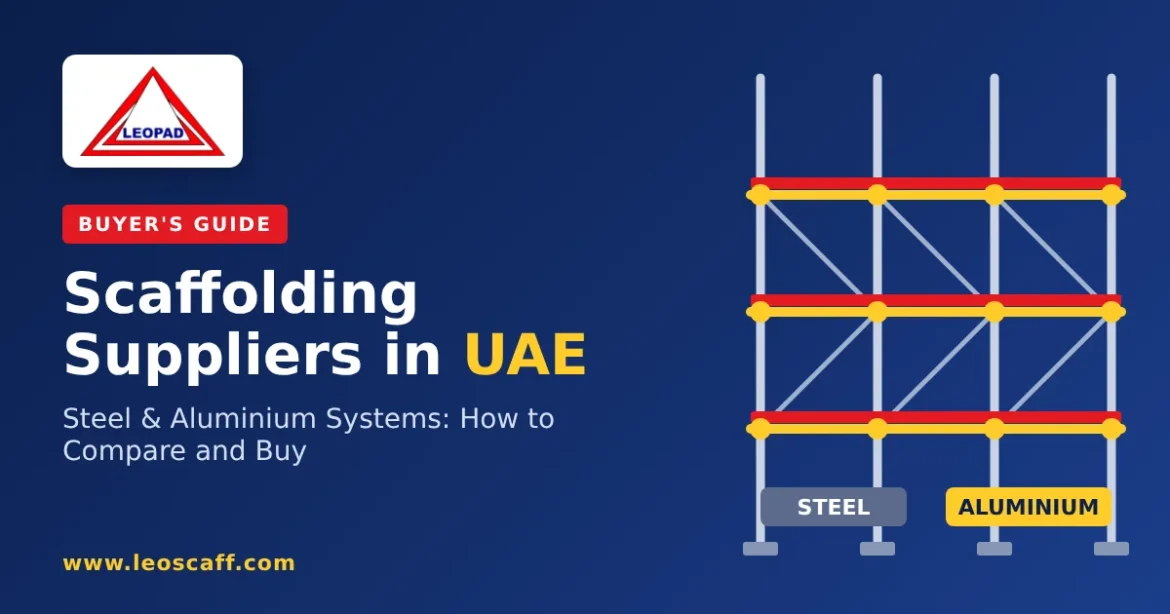
Steel and aluminum scaffolding serve distinct purposes across different construction and maintenance environments. Choosing the right system depends on your project’s specific load requirements, working conditions, mobility needs, and overall budget.
While steel provides the strength needed for heavy-duty structural work, aluminum offers lightweight equipment designed for easier movement and quick repositioning.
System Comparison Overview
| Feature / Aspect | Steel Scaffolding | Aluminum Scaffolding |
|---|---|---|
| Primary Strength | Superior load-bearing capacity, maximum stability, and long-term durability. | Lightweight design, easy transportation, and effortless mobility. |
| Ideal Applications | • Large construction and infrastructure projects • High-load capacity applications • Long-term use across multiple job sites • Projects where durability is paramount | • Indoor maintenance and repair work • Painting, finishing, and ceiling tasks • Work requiring frequent repositioning • Quick-assembly jobs with light handling |
| Weight & Logistics | Heavier: Increases transportation, handling, and setup effort. | Lighter: Simplifies transport, lifting, and manual assembly. |
| Key Selection Criteria | Review steel quality grade, connection design, corrosion protection, and structural specifications. | Check manufacturer load ratings and safety instructions (not suited for heavy structural loads). |
Check Quality, Safety, and Technical Specifications
Price should not be the only factor when buying scaffolding. Poor-quality components or incompatible parts can create safety risks, increase maintenance costs, and delay work.
Reliable scaffolding material suppliers in the UAE should be able to provide clear product information so buyers can assess whether the equipment meets their project requirements.
Check the following before placing an order:
- Material quality: Confirm the grade and specifications of the steel or aluminum.
- Load ratings: Review the stated capacity of the complete system and its components.
- Connections: Inspect couplers, locking mechanisms, joints, and fittings for compatibility.
- Platform quality: Check the condition, dimensions, and load rating of working platforms.
- Corrosion protection: Ask about galvanizing or other protective finishes where applicable.
- Safety documentation: Request relevant test reports, conformity documents, and manufacturer instructions.
Scaffolding should also be erected, inspected, altered, and dismantled by competent personnel. Follow applicable UAE requirements and site safety procedures.
Evaluate Supplier Experience and Product Availability
A dependable supplier offers more than equipment. Product availability, technical guidance, consistent quality, and delivery planning can all affect project schedules.
When comparing scaffolding dealers in Dubai, ask whether they can supply the complete system or only selected components. Missing fittings or incompatible parts can lead to avoidable delays. For a shortlist of suppliers, see our guide to the top scaffolding companies in UAE.
Calculate the Total Cost Before Making a Purchase
Your scaffolding budget should cover the complete cost of acquiring and using the equipment. Looking only at the price per frame or platform may leave important expenses out of the calculation.
When comparing scaffolding suppliers in Dubai, request itemized quotations to understand exactly what each offer includes.
Consider these costs:
- Equipment: Frames, tubes, platforms, braces, couplers, and other required parts.
- Transportation: Delivery charges based on order size and site location.
- Installation: Labor and professional services, where required.
- Maintenance: Cleaning, inspections, repairs, and corrosion protection.
- Replacement: Costs for damaged, missing, or worn components.
- Storage: Space and handling requirements between projects.
For short-term work, rental may be more economical than purchasing. For repeated projects, buying may provide better long-term value. Compare both options using your expected usage period and maintenance needs.
Make a Practical Buying Decision with Leopad Dubai LLC
A well-planned scaffolding purchase can help control expenses, reduce material waste, and keep construction work on schedule. Review product specifications, delivery terms, and after-sales support before making your final decision.
Leopad Dubai LLC can be a starting point for discussing your project needs. Contact the team to learn more about available scaffolding options and find equipment suited to your site’s working conditions and budget.
Key Takeaways
- Choose scaffolding based on project type, working height, and load requirements.
- Compare steel and aluminum systems for strength, weight, and handling needs.
- Check product quality, safety documentation, and component compatibility before buying.
- Compare supplier experience, product availability, delivery times, and total costs.
- Consider buying or renting based on project duration and expected equipment use.
Frequently Asked Questions
How do I choose a reliable scaffolding supplier in the UAE?
Compare product quality, technical specifications, safety documentation, delivery times, stock availability, and overall costs. Choose a supplier that can meet your project’s requirements.
Is steel scaffolding better than aluminum scaffolding?
Neither material is best for every project. Steel is often preferred for demanding applications, while aluminum offers easier handling and movement. Choose based on load capacity, site conditions, and intended use.
What should I check before buying scaffolding?
Check material quality, load ratings, connection compatibility, platform specifications, corrosion protection, and relevant safety documentation. Confirm that the complete system suits your working conditions.
Is buying scaffolding more economical than renting it?
Buying may be more cost-effective for frequent, long-term use. Renting can suit short projects or occasional requirements. Compare purchase costs, rental charges, maintenance, storage, and transportation.
Can Leopad Dubai LLC help with scaffolding requirements?
Contact Leopad Dubai LLC to discuss your project requirements, including the intended application, material preference, working height, and required components. Confirm product availability, specifications, and delivery arrangements before ordering.