Working at height requires the right equipment to keep workers safe and tasks running smoothly. Whether it is construction, painting, or maintenance, mobile scaffold towers provide a stable platform that can be easily moved between work areas.
However, choosing the right tower involves checking its height, load capacity, design, and safety features. Understanding these factors helps businesses select suitable equipment and reduce workplace risks.
Key Takeaways
- Mobile scaffold towers provide flexible access for elevated work.
- Different tower types suit different workplace requirements.
- Check working height, load capacity, and stability before buying.
- Safety features help reduce workplace risks.
- Regular inspections and maintenance support safe equipment use.
What Are Mobile Scaffold Towers and Where Are They Used?
Mobile scaffold towers are temporary elevated structures fitted with wheels, allowing workers to move them between nearby work areas. Unlike fixed scaffolding, they offer greater flexibility for different tasks. Businesses searching for a reliable mobile scaffolding supplier in Dubai should check product quality, available sizes, safety features, and technical support.
These towers are commonly used in construction, painting, electrical installations, warehouses, and facility maintenance. They help workers reach elevated walls, ceilings, lighting systems, and overhead equipment while reducing the need to dismantle and reassemble scaffolding repeatedly.
Which Types of Mobile Scaffold Towers Can You Choose?
Different scaffold tower designs suit different workplace needs. Here are four common types:
1. Aluminum Mobile Scaffold Towers
These lightweight towers are easy to transport, assemble, and move. Their corrosion resistance makes them suitable for various work environments.
2. Steel Mobile Scaffold Towers
Steel towers are heavier and offer strong construction, making them suitable for demanding industrial and construction applications.
3. Folding Mobile Scaffold Towers
These towers are easy to fold, transport, and store. They are useful for contractors working across multiple locations.
4. Narrow-Frame Mobile Scaffold Towers
Their compact design makes them suitable for narrow corridors, restricted spaces, and indoor maintenance work.
Before choosing a tower, check its intended use, assembly requirements, and manufacturer’s safety instructions.
How Can You Calculate the Safe Working Height?
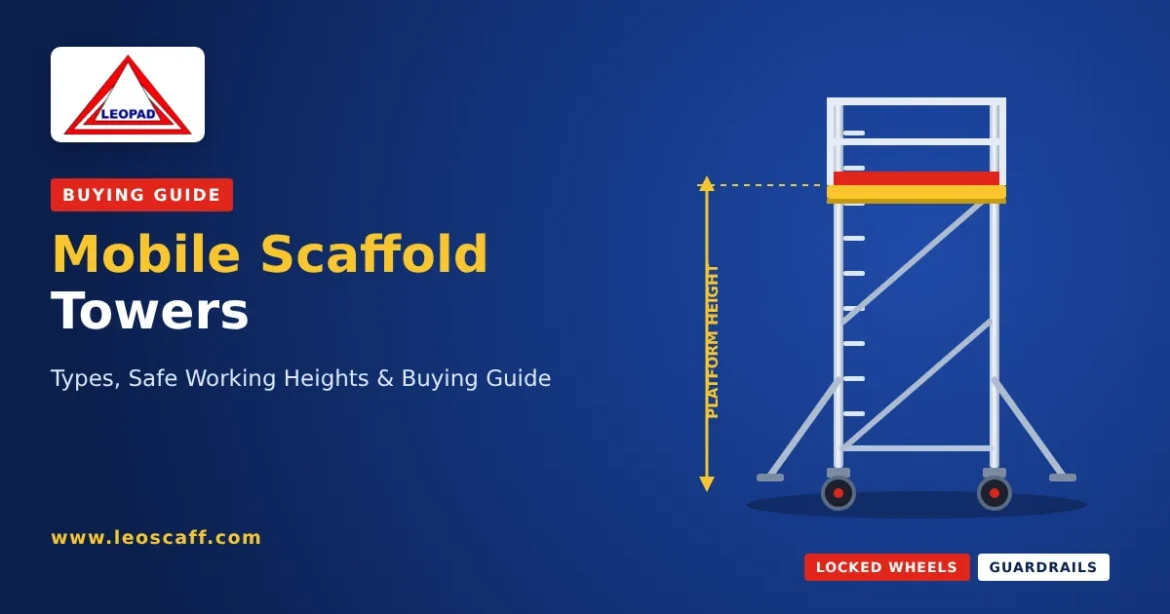
Selecting the correct tower height helps workers reach elevated surfaces without stretching or leaning dangerously. However, it is important to understand that platform height and working height are not the same.
Consider these three measurements:
| Height measurement | What it means |
| Platform height | Distance from the ground to the working platform. |
| Working height | Approximate height a worker can reach while standing on the platform. |
| Overall height | Total height of the assembled scaffold structure. |
Working height is generally estimated by adding a person’s reach above the platform to the platform height. This can help with initial equipment selection, but the manufacturer’s specifications should always guide the final decision.
Follow these safety practices when choosing the height:
- Check the maximum permitted platform height.
- Follow the manufacturer’s height-to-base requirements.
- Use stabilizers or outriggers where specified.
- Install required guardrails and toe boards.
- Place the tower on firm, level ground.
- Never stand on guardrails to reach higher areas.
OSHA’s scaffold safety requirements also cover stability, access, and fall protection. Always follow the regulations applicable to your worksite.
What Safety Features Should You Check Before Buying?
A scaffold tower should include suitable components to support worker safety and structural stability. Before purchasing, examine the following features.
- Wheel locking system: Lockable caster wheels help prevent unwanted movement while workers are using the tower.
- Guardrails: These provide protection around exposed platform edges and help reduce fall risks.
- Toe boards: They help prevent tools and materials from slipping off the working platform.
- Non-slip platforms: A suitable platform surface provides better footing during maintenance and construction tasks.
- Cross braces: These components support the tower structure and help maintain its stability.
- Outriggers: These provide additional base support when required by the tower’s design and height.
In addition to checking these features, inspect the complete structure before every use. Look for damaged frames, loose connections, worn wheels, missing parts, and other visible defects.
Never move a tower while workers or unsecured materials remain on it. Follow the manufacturer’s instructions for safe repositioning.
What Should You Consider Before Purchasing a Scaffold Tower?
The right purchasing decision depends on how frequently the equipment will be used, the working environment, and the tasks it needs to support.
Use this checklist to compare available options:
1. Material and construction
Aluminum models are useful when lightweight construction and easy movement are priorities. Steel models may suit applications requiring heavier-duty equipment. Check the frame, joints, connections, and overall finish.
2. Load capacity
Review the maximum load specified by the manufacturer. Include the combined weight of workers, tools, and materials placed on the platform. Never exceed the stated capacity.
3. Mobility and storage
Check wheel quality, locking mechanisms, transportation requirements, and storage dimensions. Folding designs may be useful when storage space is limited.
4. Accessories and compatibility
Find out whether the model supports approved stabilizers, access ladders, guardrails, and platform extensions. Avoid using accessories that are not designed for the selected tower.
5. Supplier reliability
Compare product specifications, availability, warranty information, and after-sales assistance. When evaluating an industrial ladders supplier in the UAE, also consider the range of access equipment available for different workplace requirements.
How Can You Maintain Scaffold Towers for Long-Term Use?
Regular inspections and proper storage can help extend equipment life and identify problems before they affect workplace safety.
Follow this maintenance routine:
- Before use: Check frames, braces, platforms, wheels, and locking systems.
- After use: Remove dirt, grease, and other substances from the surfaces.
- During storage: Keep equipment in a dry, protected area whenever possible.
- During inspections: Look for corrosion, cracks, loose connections, and damaged components.
- When repairs are needed: Replace defective parts with manufacturer-approved components.
A mobile scaffold with damaged structural components or faulty safety mechanisms should be removed from service until properly repaired and inspected.
Workers should also receive appropriate training on assembly, safe access, inspection, and equipment movement. Never make unauthorized changes to the tower structure.
Find Suitable Access Equipment for Your Workplace
Choosing suitable scaffolding requires checking working height, load capacity, site conditions, and safety features. An aluminium multi purpose ladder can also support certain maintenance and installation tasks.
Looking for the Right Mobile Scaffold Tower?
Leopad Dubai LLC offers access equipment options for different workplace needs. Explore suitable products, review their specifications, and check availability to find the right equipment for your requirements.
FAQs
1. What are mobile scaffold towers mainly used for?
They provide elevated working platforms for construction, painting, electrical installations, warehouse maintenance, and repair activities.
2. Are aluminum scaffold towers better than steel towers?
Aluminum towers are lighter and easier to move, while steel towers are heavier and may suit demanding applications. The right choice depends on the job.
3. How do you determine the correct scaffold tower height?
Check the required platform height, estimated working reach, manufacturer’s height limits, and applicable stability requirements before selecting a model.
4. Can mobile scaffold towers be moved while workers are on them?
Do not move a tower with workers or unsecured materials on it. Follow the manufacturer’s instructions and applicable safety regulations.
5. How often should scaffold towers be inspected?
Inspect towers before each use and after any event that could affect their stability or condition. Follow workplace inspection requirements and manufacturer guidance.