Industrial projects need strong surface protection to prevent rust, corrosion, and early damage. But applying paint or coatings without proper cleaning can affect the final results. Hiring a professional blasting contractor in Dubai helps prepare surfaces for better coating performance and long-term protection.
According to the U.S. International Trade Administration (ITA), construction contributes 8% to 10% of the UAE’s GDP. It is expected to grow by 3% to 5% annually until 2028, increasing the need for reliable industrial services.
Key Takeaways
- Industrial blasting removes rust, old paint, dirt, and other surface contaminants.
- Different blasting methods are used depending on the surface type and project requirements.
- Proper surface preparation helps protective coatings stick better and last longer.
- Safety equipment, dust control, and trained workers are important during blasting work.
- Check the contractor’s experience, equipment, quality checks, and project schedule before hiring.
- Proper planning and surface inspection help reduce delays and avoid unnecessary rework.
What Does an Industrial Blasting Contractor Do?
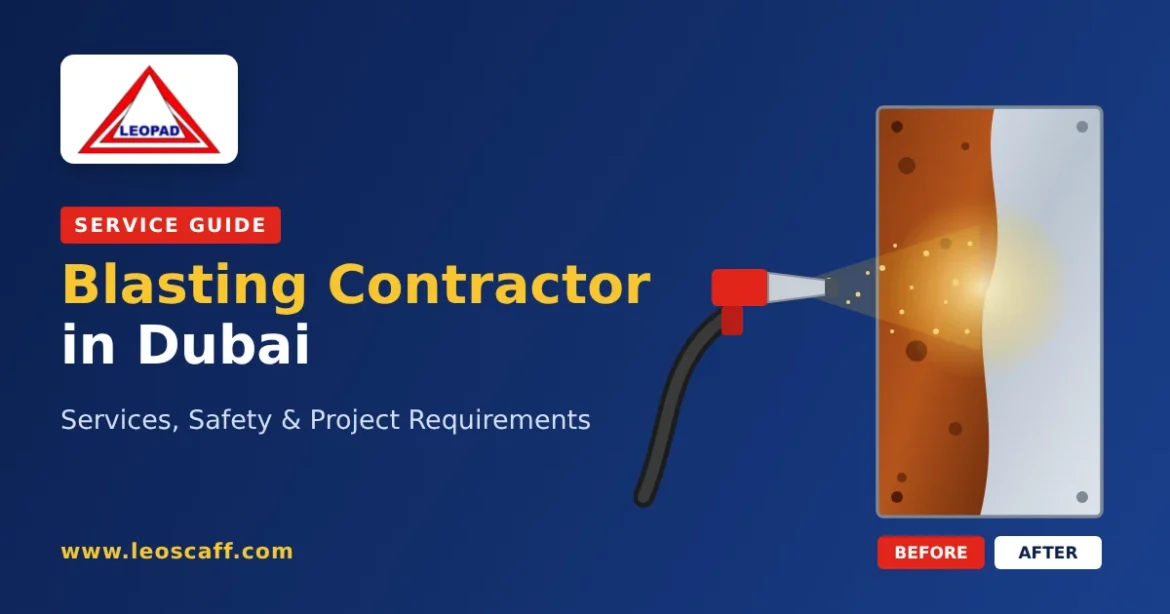
An experienced blasting contractor in Dubai removes rust, old paint, dirt, and other unwanted materials from surfaces using special equipment and abrasive materials. This creates a clean base for painting and protective coatings, helping them stick better and reducing the risk of peeling and corrosion.
The work may also include painting & coating for process equipment and industrial structures to protect them from moisture, chemicals, and regular wear. It usually involves surface inspection, selecting suitable blasting materials, cleaning, and checking the surface before applying coatings.
Which Blasting Services Are Commonly Used in Industrial Projects?
Different surfaces require different cleaning methods. The right option depends on the material, its condition, project size, and required finish.
Here are four common methods used for industrial surface preparation.
1. Abrasive Blasting
Materials used: Steel grit and steel shot.
Main purpose: Removing rust, old paint, and stubborn dirt.
Common applications: Pipelines, storage tanks, steel structures, and heavy equipment.
The contractor selects the abrasive material according to the surface type and required finish.
2. Sandblasting
Main purpose: Cleaning surfaces and removing unwanted coatings.
Common applications: Metal surfaces and other suitable materials that need preparation before painting.
Proper equipment and dust control are important during this process. Contractors should also use approved abrasive materials to protect workers and nearby areas.
3. Shot Blasting
Materials used: Small metal particles.
Main purpose: Removing surface contaminants and creating an even finish.
Common applications: Steel plates, metal components, industrial floors, and structural parts.
It helps prepare surfaces for further protective treatments.
4. Surface Preparation for Coating
Blasting is often the first step before applying industrial paint or protective coatings. Once cleaning is complete, the surface should be checked for dust, oil, moisture, and other contaminants.
This inspection helps ensure the surface is ready for coating and supports better results.
Which Industries Need Industrial Blasting Services?
Industrial blasting is useful for businesses that need to maintain equipment and protect metal structures from corrosion. Many industries work in conditions involving moisture, chemicals, heat, and regular wear.
The following table explains some common applications:
| Industry | Common blasting applications |
| Oil and gas | Cleaning pipelines, storage tanks, and processing equipment. |
| Construction | Preparing bridges, steel beams, and metal frameworks. |
| Marine | Removing rust and old coatings from ships and marine structures. |
| Manufacturing | Cleaning machinery, production equipment, and metal parts. |
| Power plants | Preparing pipelines, industrial equipment, and supporting structures. |
Businesses looking for industrial blasting services in Dubai can consider their equipment type and surface condition before selecting a suitable method. Working with an industrial coating company in Dubai can also help them understand the preparation and coating requirements for different operating conditions.
How Can You Maintain Safety During Blasting Work?
Blasting involves high-pressure equipment and abrasive materials that can produce dust and flying particles. These may create risks for workers and nearby people if proper safety measures are not followed.
Workers should wear suitable protective equipment, including helmets, respirators, gloves, and safety footwear. Contractors should also use proper dust control systems, inspect blasting machines, hoses, and compressors, and restrict access to the work area. Regular worker training and safe waste disposal are equally important to reduce risks and protect the surrounding environment.
What Should You Check Before Hiring a Blasting Contractor?
Choosing the right service provider can affect the quality, safety, and timing of your project. Before hiring a blasting contractor in Dubai, review these five important factors.
1. Experience with similar projects
Ask about previous work involving pipelines, storage tanks, steel structures, and heavy equipment. Experience with similar surfaces can help the contractor select suitable preparation methods.
2. Equipment and materials
Check whether the contractor has suitable blasting machines, compressors, and abrasive materials. The equipment should match your project requirements.
3. Safety procedures
Ask about worker training, protective equipment, dust control, and site safety arrangements. These measures help reduce accidents and unnecessary delays.
4. Quality inspections
Understand how the contractor checks surface cleanliness and roughness before and after blasting. Proper inspection helps ensure the surface is ready for painting or coating.
5. Project schedule
Discuss the expected completion time, workforce, site access, and work schedule. Clear communication helps avoid delays and supports better coordination.
What Are the Main Requirements Before Starting a Blasting Project?
Before work begins, the client and contractor should agree on the project scope, surface condition, equipment, and schedule.
Use this checklist to prepare for the work:
- Surface inspection: Check the material, rust level, existing paint, and overall surface condition.
- Blasting method: Select a suitable method and abrasive material.
- Site preparation: Arrange proper access, ventilation, and dust control.
- Safety approval: Complete required risk assessments, permits, and site safety checks.
- Weather conditions: Check temperature, humidity, and moisture levels for outdoor work.
- Quality inspection: Decide how the cleaned surface will be checked and approved.
- Work schedule: Set deadlines and coordinate blasting with other project activities.
Completing these steps before starting helps prevent confusion, reduce rework, and keep the project organized.
Get Your Industrial Surface Preparation Work Started
Proper blasting helps remove surface contaminants and prepares industrial structures and equipment for protective coatings. Choosing the right contractor, checking safety arrangements, and planning the work can help prevent delays and improve the final results.
Planning a Blasting or Surface Preparation Project?
Contact Leopad Dubai LLC to discuss your requirements and check availability for your upcoming work.
FAQs
1. What is industrial blasting used for?
Industrial blasting removes rust, old paint, dirt, and other unwanted materials from surfaces before painting or applying protective coatings.
2. Which materials are used in blasting?
Common abrasive materials include steel grit, steel shot, and other suitable abrasives selected according to the surface and cleaning requirements.
3. Is blasting necessary before industrial painting?
Yes. Proper blasting removes contaminants and creates a suitable surface for paint or protective coatings to stick properly.
4. How long does a blasting project take?
The time depends on the surface area, level of rust, cleaning method, site conditions, and project size.
5. What safety equipment is needed during blasting?
Workers generally need protective helmets, respirators, gloves, safety footwear, and suitable protective clothing.